
Ground Screw Installation UK
A considered ground screw installation starts before the first screw reaches the ground. We review the proposed structure, site access, levels and available ground information, then develop the foundation approach around the actual project.

What happens before and during installation?
The useful starting point is not a generic screw count. It is the building footprint, structural loads or frame design, finished levels, site access and anything already known about the ground. That information shapes the proposed screw type, layout and installation method.
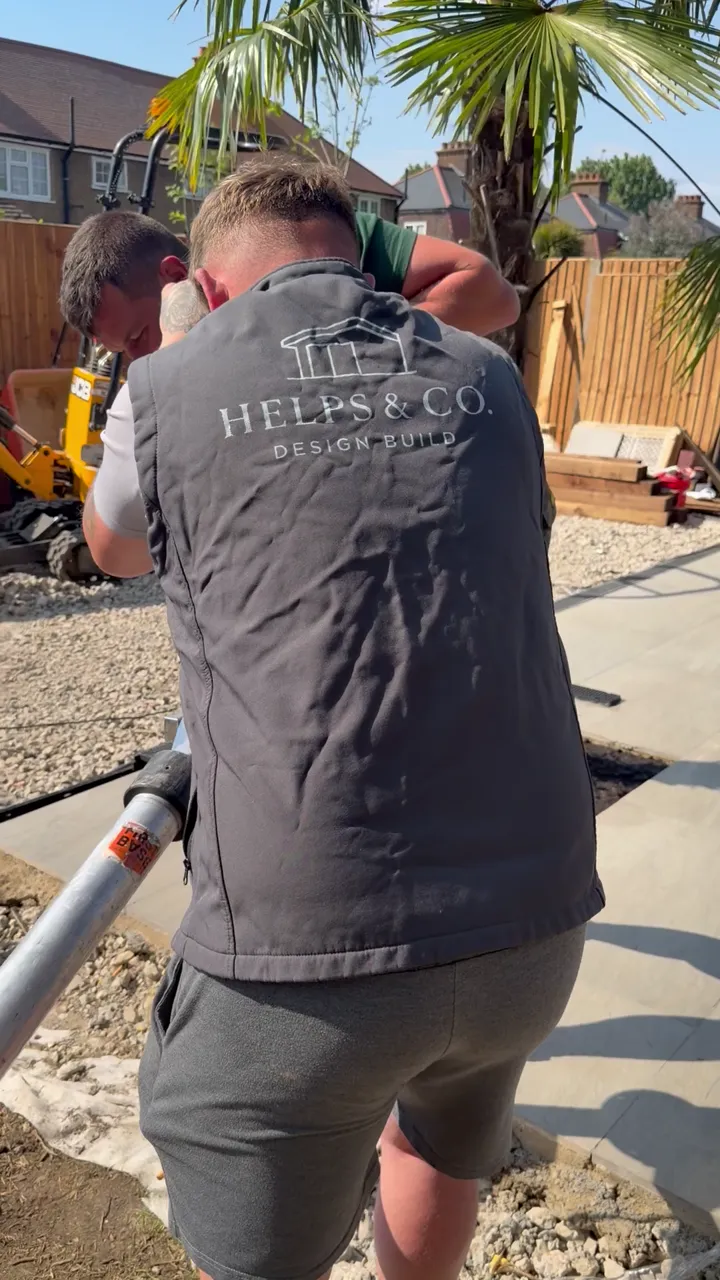
Once the layout has been coordinated, screw positions are set out and installed while the team monitors alignment and ground response. Head plates or connection details are then prepared for the supporting timber or steel structure.
- Review drawings, dimensions and intended structure
- Check site access, boundaries, levels and known services
- Coordinate the foundation layout with the supporting frame
- Install and align the screws at the agreed positions
- Record relevant installation observations and prepare for handover
Installation resistance, refusal and screw selection
Ground conditions can change across a single footprint. Competent clay, dense sand, chalk, made ground, roots or buried obstructions can each produce a different installation response. A screw that progresses well at one position may meet refusal or disturbed material elsewhere.
That is why screw diameter and length should not be selected from the building name alone. The structure, required capacity, ground response and connection detail all matter. Read the ground types guide and how ground screws work for the technical background.

When testing or additional verification may be needed
Installation observations can provide useful information, but some structures, sites and design teams require project-specific testing. The appropriate verification route depends on what the engineer, client or project documentation needs to establish.
Our ground screw pull-testing service is available at the existing published price of £1,650 plus VAT, subject to project review. The testing and verification guide explains what a test can and cannot demonstrate.

Where ground screw installation may—and may not—fit
Ground screws can reduce excavation, spoil movement and curing time for suitable structures and ground conditions. They can also be useful where access is constrained or the surrounding garden needs to remain relatively undisturbed.
They are not automatic substitutes for every concrete foundation. Obstructions, shallow refusal, unsuitable fill, highly loaded structures or connection constraints may require testing, redesign or an alternative foundation. See when ground screws may not suit before treating the system as a foregone conclusion.
A better brief makes the next decision easier.
These are practical starting points, not substitutes for project design or a site review.
What information should I send?
Plans or dimensions, the intended structure, project postcode, known ground information, access photographs and any structural loads or connection details already available.
Do you install nationwide?
The team is Surrey-based and reviews ground screw projects across the UK. Mobilisation and practical site access are considered as part of the project review.
Can the structure be built immediately?
The screw foundation itself has no concrete curing period, but the next stage still depends on the agreed connection detail, installation outcome and any required verification.
Bring the project into focus.
Share the footprint, structure, location and site context. We can start with the information available and identify what needs checking next.
Prefer to speak directly? 07544 848182 or info@groundscrewcompany.co.uk